
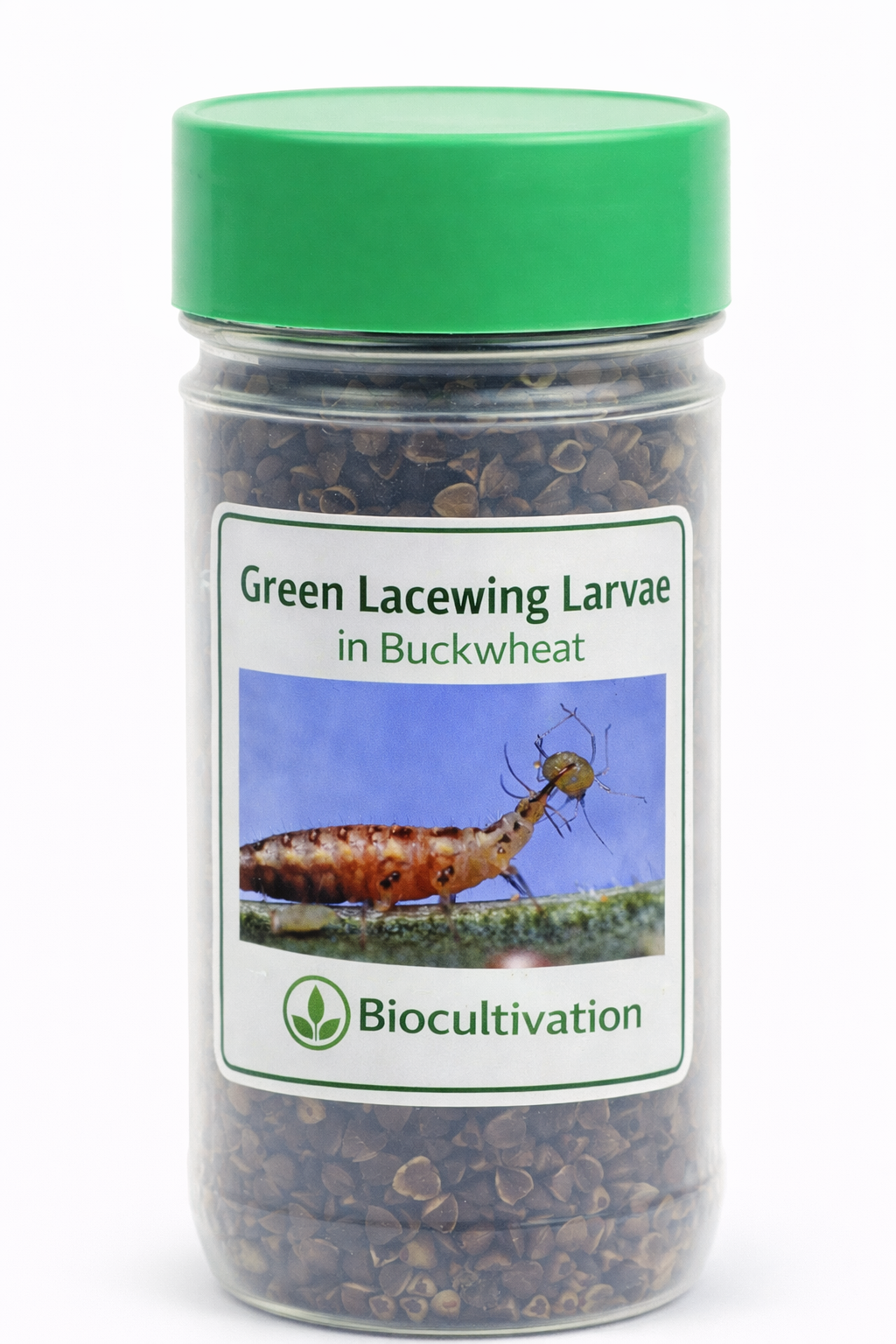
Green Lacewing Larvae in Buckwheat
Lacewing larvae in buckwheat provide a powerful, ready-to-release biological control for a wide range of soft-bodied insect pests. The buckwheat hulls protect the larvae during shipping and help evenly distribute them when applied to plants or growing areas. Once released, the larvae immediately begin feeding on aphids, thrips, mites, mealybugs, and other common pests.
Additional Info
Lacewing Larvae in Buckwheat
(1,000 • 5,000 • 10,000 larvae)
Lacewing larvae in buckwheat provide fast, effective biological control of a wide range of soft-bodied insect pests. Shipped as actively feeding larvae, this product delivers immediate pest suppression without waiting for eggs to hatch. The buckwheat hulls protect the larvae during transit and serve as an easy carrier for uniform distribution during release.
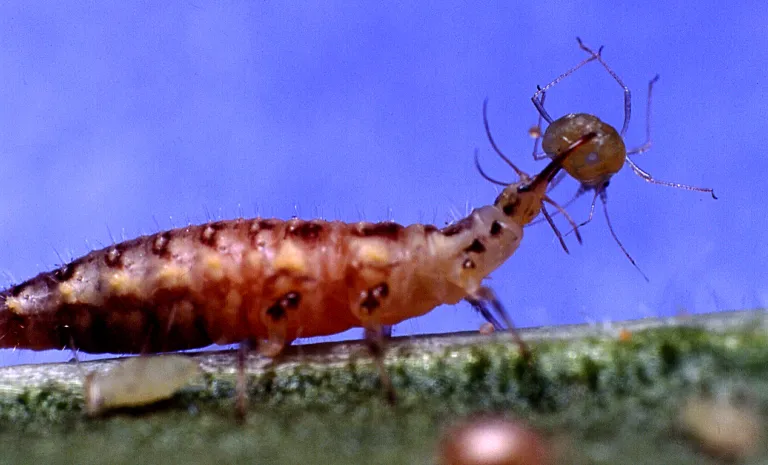
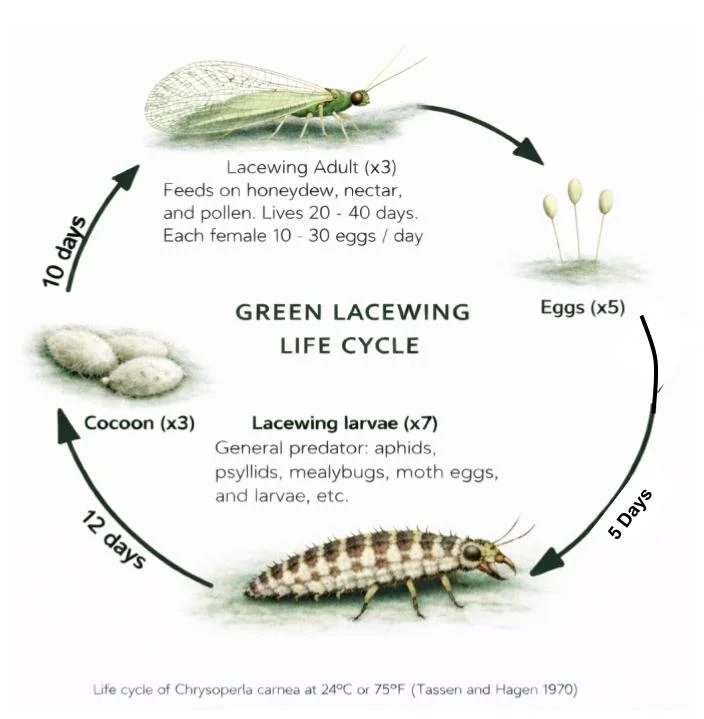
Once applied, lacewing larvae immediately begin hunting aphids, whiteflies, thrips, spider mites, mealybugs, scale crawlers, psyllids, leafhopper nymphs, moth eggs, and small caterpillars. Often called “aphid lions,” lacewing larvae use their pincer-like jaws to capture prey and can consume hundreds of pests during their two-week feeding period before pupating.
Lacewing larvae are ideal for hot spots, active infestations, and situations where rapid knockdown is needed, including gardens, greenhouses, orchards, vineyards, landscapes, and interiorscapes. Because larvae cannot fly away, they remain in the release area and concentrate their feeding where pests are present.
Release & Use
Release as soon as possible after arrival
Apply in early morning or evening for best survival
Sprinkle larvae with buckwheat directly onto infested foliage
Lightly mist plants before release if conditions are dry
Avoid releasing where ants are actively tending pests
A general guideline is one larva per 10–50 pests, depending on plant growth rate and infestation pressure. Multiple releases at 7–14 day intervals may be needed for ongoing control.
Important Notes
Lacewing larvae are living predators and should not be refrigerated
Ant control is critical—ants will attack larvae and protect honeydew-producing pests
Compatible with most biological and low-impact pest management programs
Lacewing larvae in buckwheat offer one of the most reliable and economical ways to quickly reduce pest populations while supporting long-term biological balance.