Outdoor Cultivation
Target Pests: 2-spot, pacific, (possible tomato red spider mite, Tall GH plants, tall plants in interiorscapes
43°-104°F (with High humidity)
*Best in warm/hot GH
*Good for low infestations
*Tolerates lower humidities
*Not good outdoors
*Not deterred by tomato trichomes
Ok with californicus
Fast knockdown
Shipped Monday through Wednesday. Order by Previous Friday.
Target pest
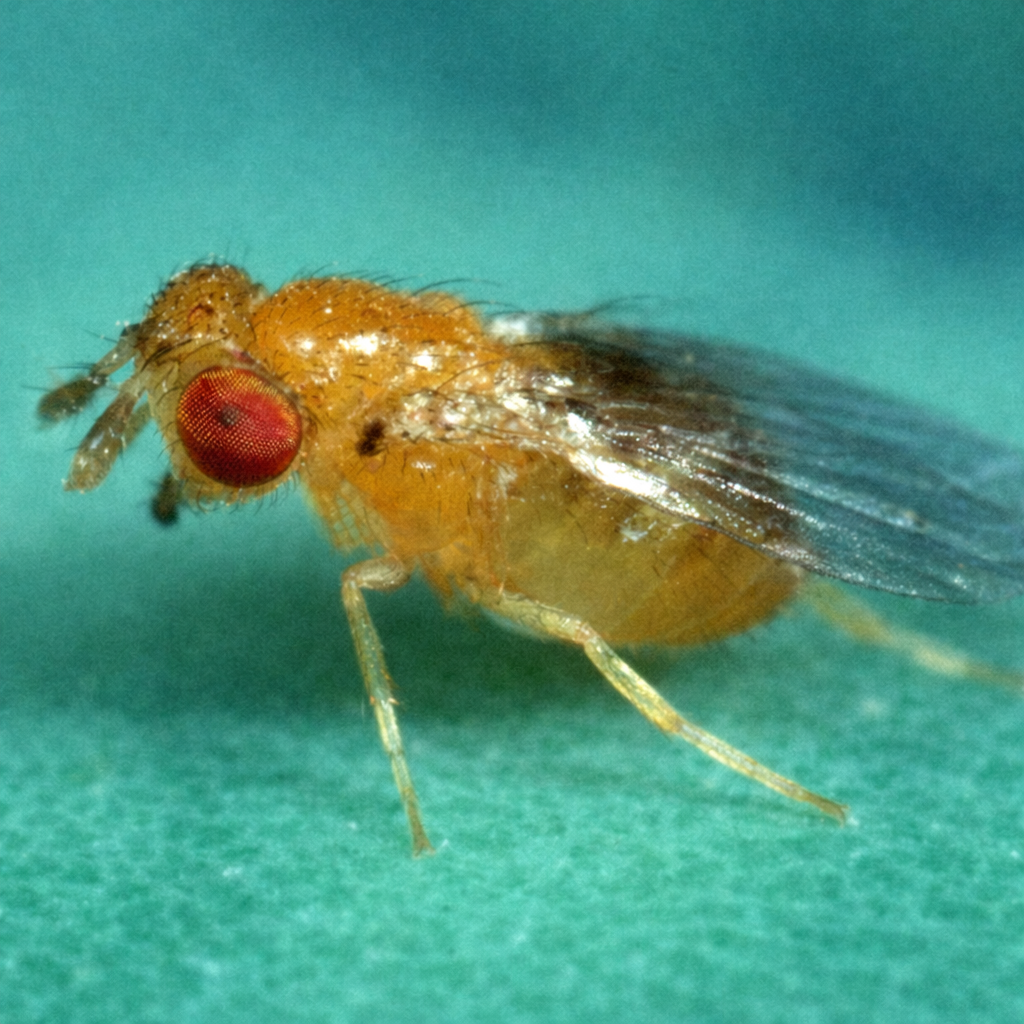
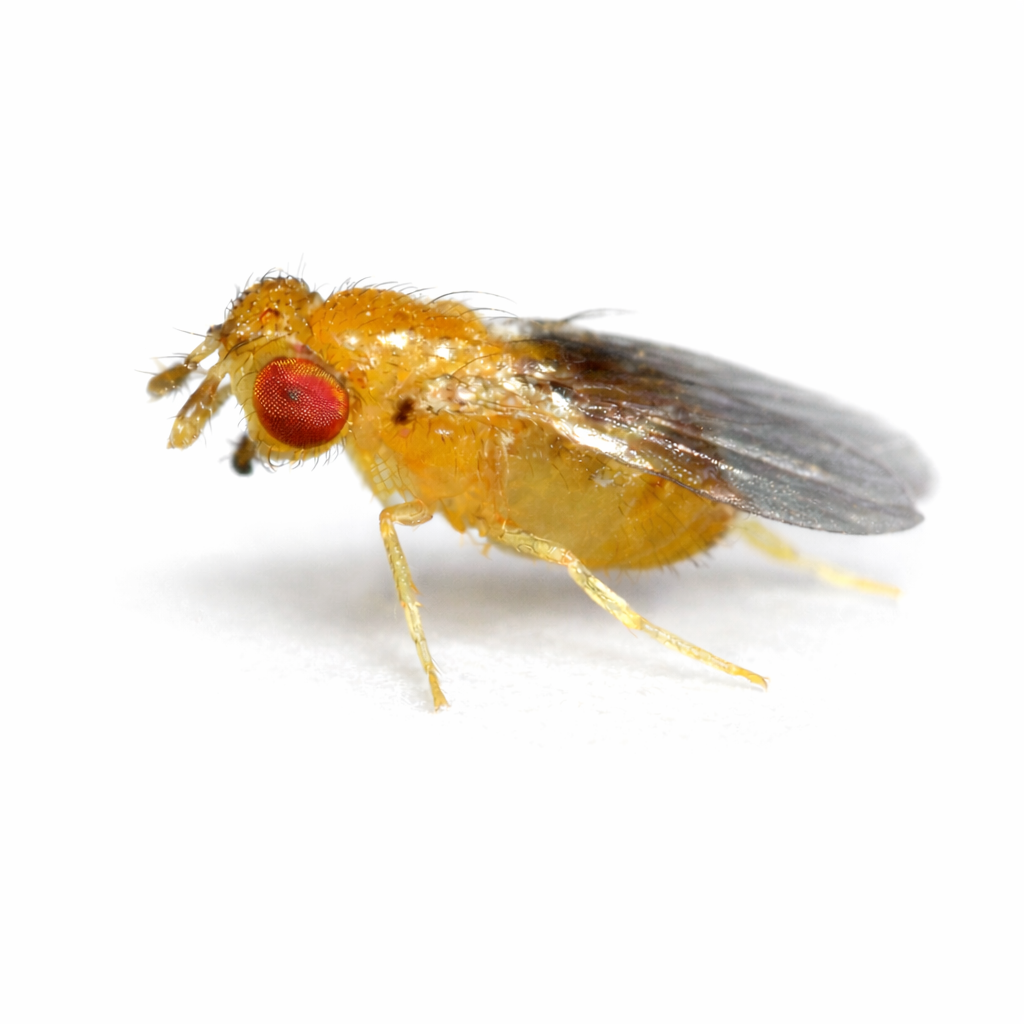
Aphidoletes aphidimyza is a predatory midge (a small fly). The orange maggot stage targets over 60 species of aphids and psyllids. Very cost-effective for preventive control at low aphid levels. May colonize in protected gardens and orchards, appearing year after year at first sign of aphids in spring. Reproduces in greenhouses. Pupae diapause with daylight < 16 hours, at temperatures < 54° F. Supplemental light in winter encourages new generations, but is not required. Larvae drop to soil to pupate – avoid disturbing soil. Shipped as pupae in trays or vials with vermiculite.
Shipped Wednesday, order by previous Friday
Stratiolaelaps simitus / Hypoaspis miles is a predatory mite that eats larva of fungus gnat. Also feeds on western flower thrips (WFT) pupae and springtail (especially in house plants). Lives in top layer of soil, feeds on small, soil-inhabiting insects, mites and all stages of springtails. Can adapt to many different growth media and capillary mats. No diapause: can be used year round. Active at temps > 54° F . Can survive low pest densities. Helps clean up greenhouses and mushroom production, as well as controlling mites on tarantulas, lizards and bees. Should not be applied to soil that has been treated with lime or copper sulfate mixtures. Atheta is a predator of Stratiolaelaps simitus; Stratiolaelaps simitus eats nematodes, good and bad. 10-13 L per acre OR 50 mites per 10 sq ft. Twice monthly, 2-5 times overall. Most effective applied prior to heavy infestations and for end of crop clean-up.
Shipped Wednesday, order by previous Friday
Amblysieus cucumeris (=Neoseiulus cucumeris) is a predatory mite shipped in bran carrier. Targets western flower thrips, onion thrips, and to a lesser extent, spider, cyclamen and broad mites. Nymph and adult stages feed on immature stages of thrips, so a decrease in adult thrips populations will show 3 weeks or so after release. Adults also feed on twospotted spider mites and their eggs. Cucumeris takes 3-4 weeks to establish, so it should be applied before thrips populations appear. Cucumeris also feeds on pollen as an alternate food source. Ideal conditions are 66°-80° F, 65-72% RH. Day lengths less than 12.5 hours with night temperatures less than 70° F induce diapause unless supplemental light is provided.
Shipped Wednesday, order by previous Friday
PLATNERI Trichogramma platneri targets many Lepidopteran pests, including looper, amorbia, leaf rollers, navel orangeworm, and codling moth. Used in greenhouses, interior plantscapes, orchards, vineyards, field crops. T. platneri is the most commonly found Trichogramma west of the Rockies (especially found in trees), but parasitizes moth eggs in many other settings. All-purpose, slightly less tolerant than T. pretiosum of hot and dry weather.
Shipped MTW, order previous Thursday.
PRETIOSUM Trichogramma pretiosum targets many Lepidopteran (moth and butterfly) pest insects, including corn earworm, tomato fruitworm, cotton bollworm, tobacco budworm, alfalfa worm, omnivorous leafroller, cabbage looper, diamondback moth and others in field crops, vineyards and stored grain. Tolerant to hot and dry conditions with adaptable host range, commonly found in row crops in North America. Some strains dominate in trees as well as in fields.
Shipped MTW, order previous Thursday.
Trichogramma brassicae is a beneficial parasitic wasp that prevents caterpillar and borer damage by parasitizing moth eggs before they hatch, making it an ideal biological control for cole crops and other low-growing plants in cooler climates. This proactive biocontrol solution targets more than 200 Lepidopteran pests and integrates seamlessly into organic and IPM programs for gardens, farms, greenhouses, and orchards. Best results are achieved when releases are timed with early moth flights and repeated every 7–10 days to suppress ongoing egg-laying pressure.
Shipped MTW, order previous Thursday.
Trichogramma minutum is a microscopic beneficial wasp that prevents caterpillar damage by parasitizing moth eggs before they hatch, making it an effective biological control for orchards and tall crops. Native and well-adapted to tree canopies, it targets over 200 pest moth species including codling moth, budworms, and loopers, before larvae can feed on crops. Best results are achieved with early, repeated releases timed to moth flight as part of an organic or IPM program.
Shipped MTW, order previous Thursday.
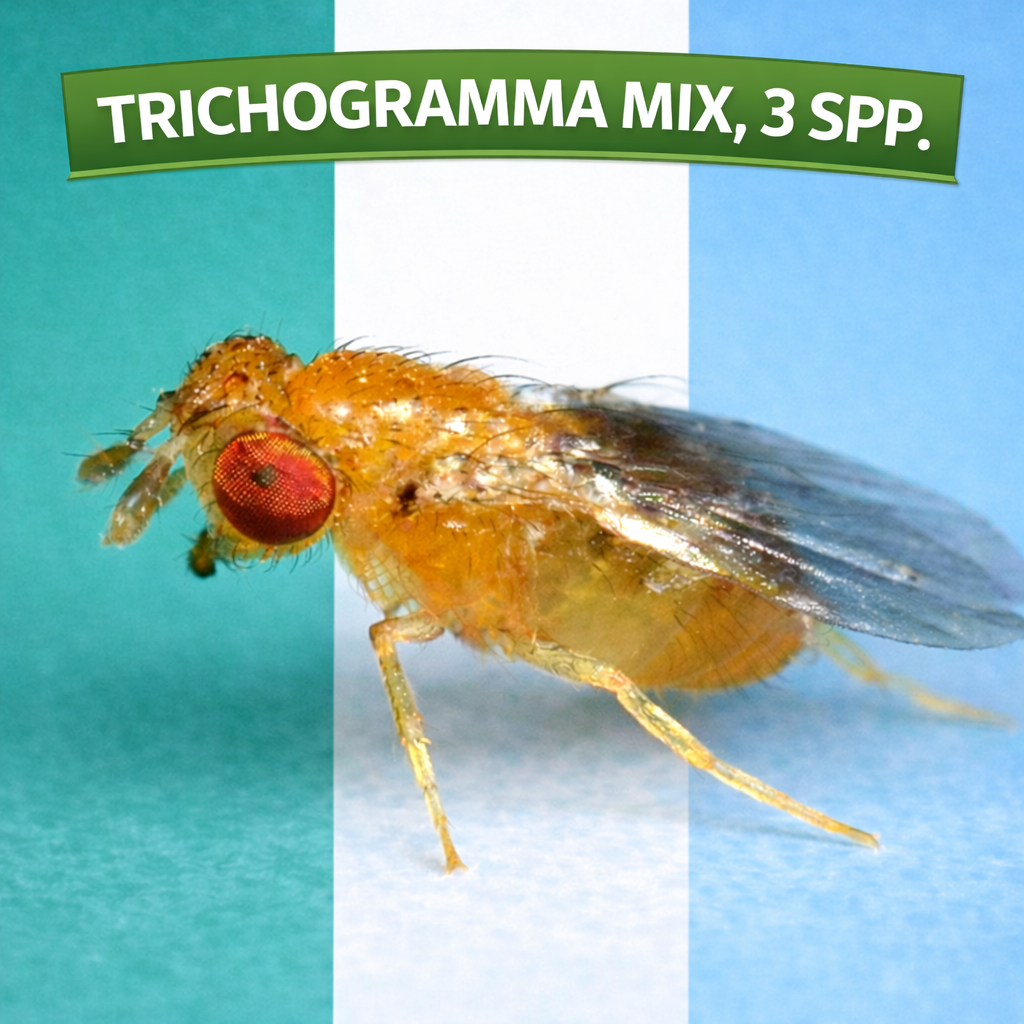
Trichogramma Mix (3 spp.) is a broad-spectrum beneficial insect card combining Trichogramma brassicae, minutum, and platneri to control moth pests before caterpillars hatch. This mixed-species release targets the eggs of over 200 moth species and adapts to vegetables, orchards, trees, greenhouses, and ornamental plantings across diverse climates and canopy heights. Ideal for organic and IPM programs, early releases provide preventative, season-long moth control without harming plants.
Shipped MTW, order previous Thursday.


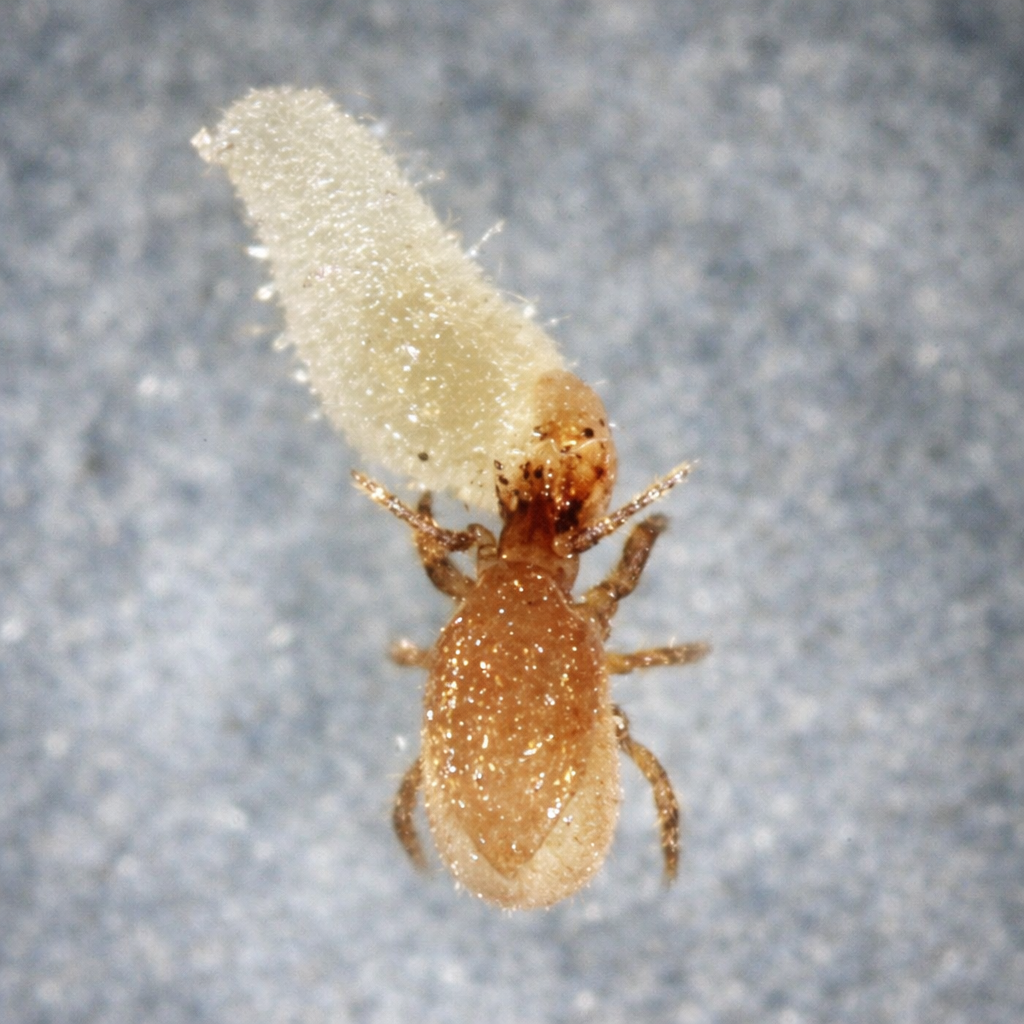
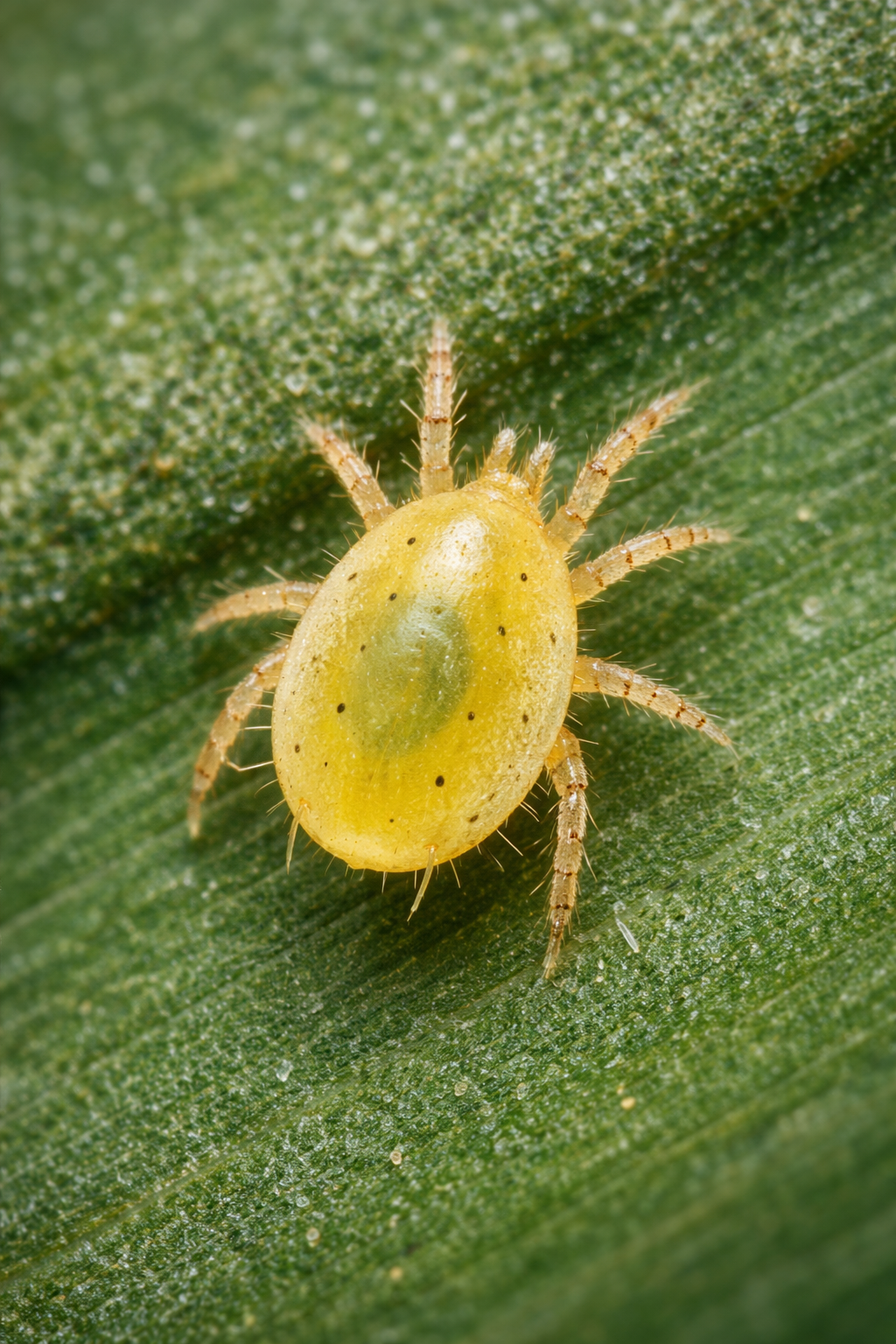

Neoseiulus californicus (=Amblyseius californicus) is a general mite predator. Targets TSSM, Pacific, cyclamen, broad, and persea mites. Good for lower spider mite densities – survives on pollen and small insects. Use on strawberry, corn, grape, rose, vegetables, ornamentals, and interiorscapes. Packaged in dry carrier. Prefers warm and humid conditions: 50°-105° F, 40 - 80% RH. Tolerates lower humidity than Persimilis and Fallacis.
Shipped Monday through Wednesday, Order by Previous Friday.