
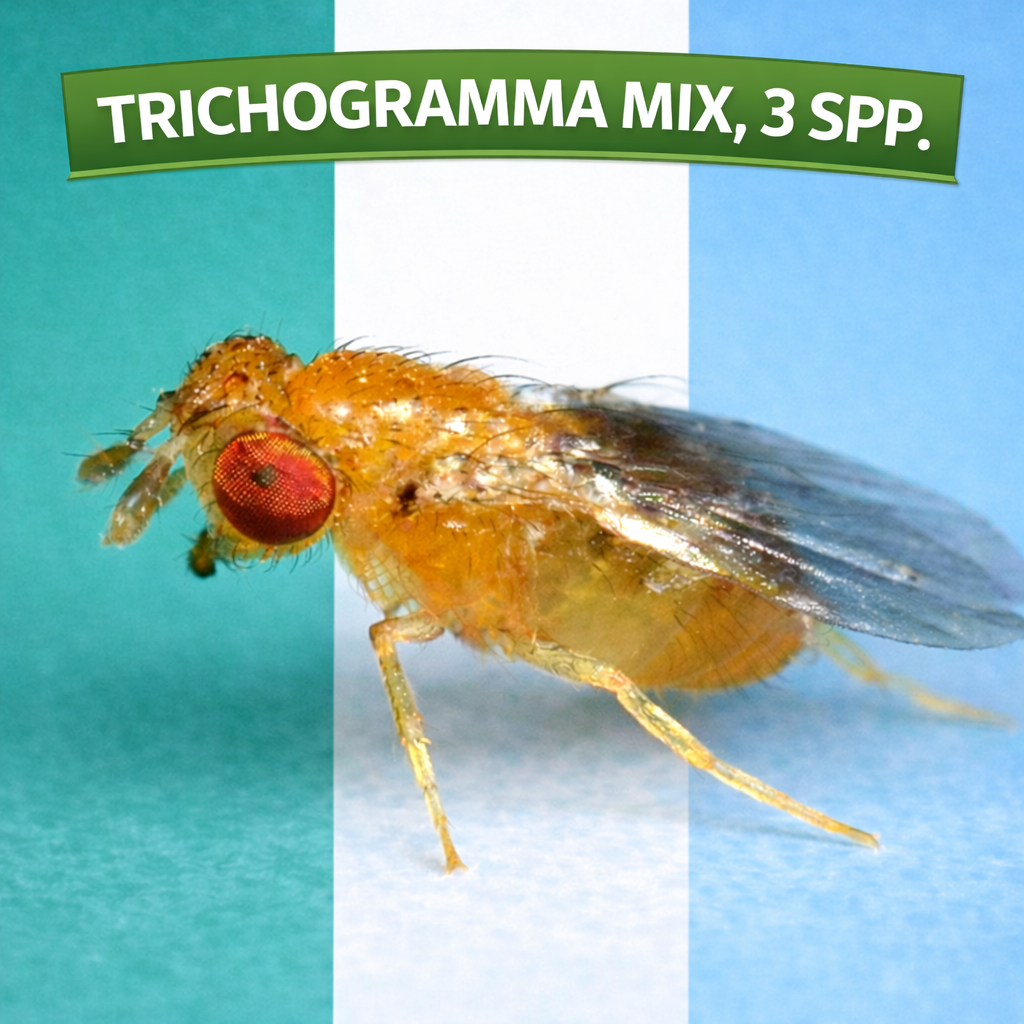
Trichogramma mix, 3 spp; T.brassicae, T. minutum, T. platneri
Trichogramma Mix (3 spp.) is a broad-spectrum beneficial insect card combining Trichogramma brassicae, minutum, and platneri to control moth pests before caterpillars hatch. This mixed-species release targets the eggs of over 200 moth species and adapts to vegetables, orchards, trees, greenhouses, and ornamental plantings across diverse climates and canopy heights. Ideal for organic and IPM programs, early releases provide preventative, season-long moth control without harming plants.
Shipped MTW, order previous Thursday.

Additional Info
Trichogramma Mix- T. brassicae, T. minutum, and T. platneri
Broad-Spectrum Egg Parasitoids for Preventative Moth Control
The Trichogramma Mix (3 spp.) Card combines Trichogramma brassicae, Trichogramma minutum, and Trichogramma platneri on a single release card to provide wide environmental coverage across crops, canopy heights, and regions. This mixed-species approach increases the likelihood that at least one Trichogramma species is perfectly matched to your crop, pest pressure, and growing conditions.
Trichogramma are microscopic parasitic wasps that eliminate moth pests at the egg stage—before caterpillars can hatch and damage plants—making them one of the most effective preventative biological controls available.
Why a 3-Species Blend?
Different Trichogramma species perform best in different environments. By combining three complementary species on one card, this product provides broader and more resilient control across diverse settings:
Trichogramma minutum – Native to eastern regions; excels in orchards, trees, grapes, ornamentals, interiorscapes, and environments with canopy heights over 5 feet
Trichogramma brassicae – Highly effective in vegetables, gardens, orchards, and field crops
Trichogramma platneri – Ideal for western trees, avocados, grapes, ornamentals, and apple, pear, and walnut orchards
The result is a versatile release that adapts naturally to mixed plantings, transitional seasons, and varied pest pressure.
Target Pests
Trichogramma attack the eggs of over 200 species of moths and butterflies, including many of the most destructive caterpillar pests:
Corn earworm
European corn borer
Imported cabbage worm
Diamondback moth
Cabbage looper
Cutworms and armyworms
Tomato and tobacco hornworms
Pecan nut casebearer
Leafrollers, fruitworms, and borers
Because Trichogramma kill pests before larvae emerge, crops are protected before feeding damage occurs.
How Trichogramma Work
Adult Trichogramma are extremely small—about 1/50 of an inch long, with a wingspan near 1/50 inch—yet they are highly efficient egg hunters. Females locate freshly laid moth eggs (up to four days old) and drill through the eggshell to deposit one or more of their own eggs inside.
The Trichogramma larvae develop entirely within the host egg, consuming it from the inside. The parasitized egg turns dark brown or black, and adult wasps emerge 7–10 days later by chewing a small exit hole in the eggshell. In warm conditions, many generations can be produced rapidly, allowing populations to expand quickly and stay ahead of pest outbreaks.
Trichogramma do not feed on plants and do not harm vegetation in any way.
Identification
Adults are pale yellow to yellow-and-black
Bright red eyes, short antennae, compact bodies
Often mistaken for tiny gnats
Parasitized host eggs turn black
Emergence holes may be visible in host eggs after adults exit
Product Format
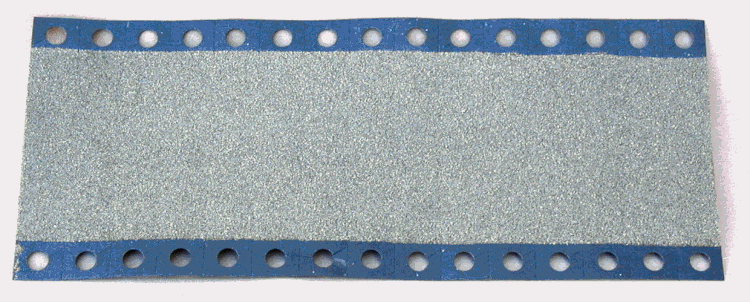
Trichogramma Mixed Species Cards contain parasitized moth eggs attached to perforated cardboard.
Approximately 100,000 Trichogramma per card
Each card separates into 30 individual squares
About 3,300+ Trichogramma per square
Allows even distribution across crops, trees, and greenhouses
Wasps typically emerge 2–5 days after delivery, depending on temperature.
Storage & Handling
Ideal emergence temperature: 80–90°F
Emergence can be slowed by holding cards at cooler temperatures (not below 40°F)
Keep cards shaded and out of direct sun
Release promptly once adults begin emerging (often seen in the morning)
Delaying release after emergence reduces effective pest control time.
When to Release
Trichogramma should be released when moths are flying and laying eggs. This timing is critical, as Trichogramma target freshly laid eggs.
Begin releases early in the season, once crops provide some shade (for example, when tomatoes reach 12–28 inches tall). Early releases allow populations to grow geometrically every 7–10 days, giving biological control a strong advantage over pest populations.
Minor early pest presence should be tolerated to allow beneficial populations to establish and provide long-term suppression.
Suggested Release Rates
Release rates vary with crop type, pest pressure, and environment. General guidelines include:
Corn & field crops: 1–10 cards per acre
Avocados, trees, grapes, ornamentals, apples, pears, walnuts, pecans:
~1 card per acre (30 squares per acre)Orchards, vegetables, greenhouses, interiorscapes:
½–1 card per acre (30 squares per acre)
For best results, releases may be repeated weekly during active moth egg-laying periods.
Ideal Uses
Orchards & tree crops
Vegetables & field crops
Greenhouses & interiorscapes
Ornamentals & landscapes
Mixed plantings and variable canopy heights
Organic, regenerative, and IPM programs