
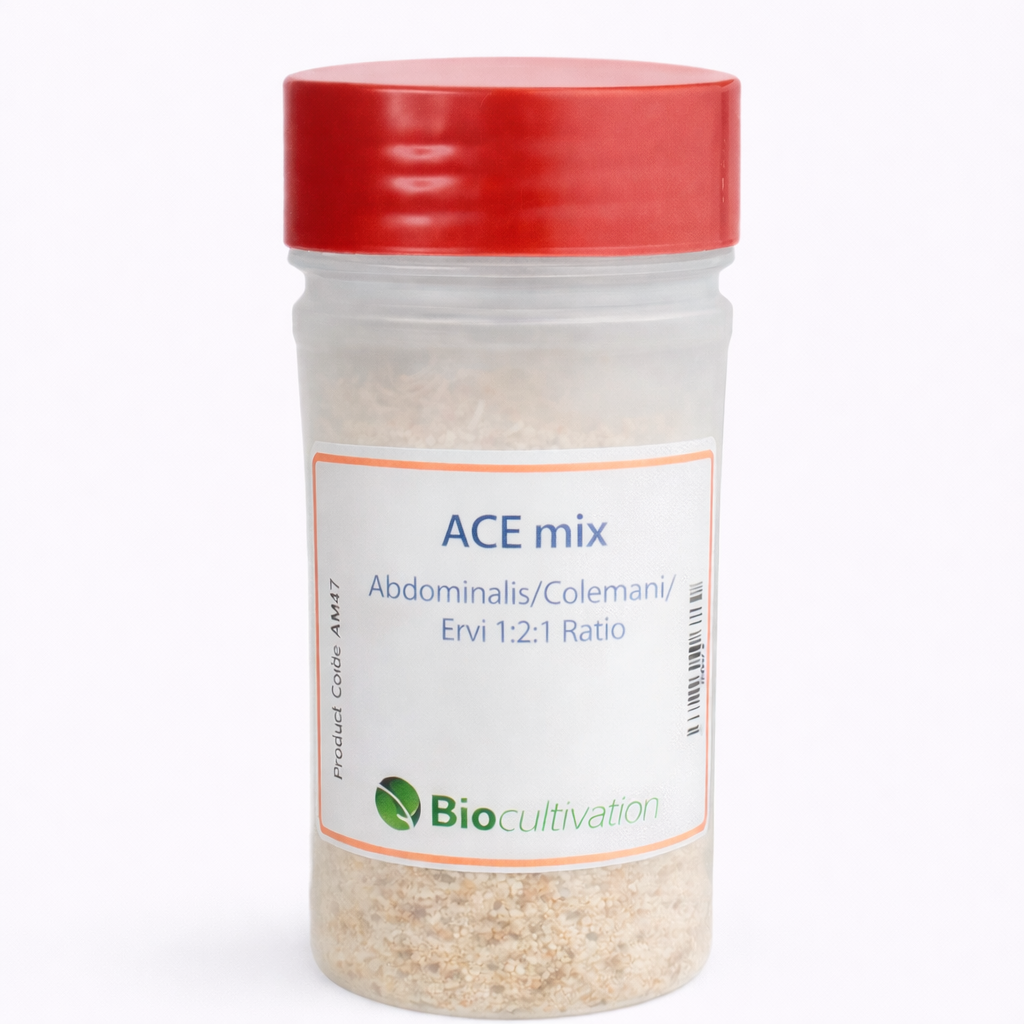
ACE mix, Abdominalis/Colemani/Ervi 1:2:1 - 500 Adults
ACE mix is a broad-spectrum aphid biological control that combines Aphelinus abdominalis, Aphidius colemani, and Aphidius ervi in a balanced 1:2:1 ratio of 500 Adults to provide reliable, preventative aphid suppression. This complementary blend targets both small and large aphid species, with colemani addressing smaller aphids, ervi controlling larger aphids, and abdominalis offering longer-lasting, generalist control. Ideal for greenhouses and gardens, ACE mix is best used preventatively or at the first sign of aphids and integrates easily into IPM programs when ants and sticky traps are managed appropriately.
Additional Info
ACE mix is a preventative and early-intervention aphid biological control designed to provide consistent, broad-spectrum suppression across a wide range of aphid species commonly found in greenhouses, gardens, and protected growing environments. By combining Aphidius colemani, Aphidius ervi, and Aphelinus abdominalis in a carefully balanced 1:2:1 ratio, this mix delivers more reliable coverage than single-species releases, especially when aphid identification is uncertain or multiple aphid species are present.
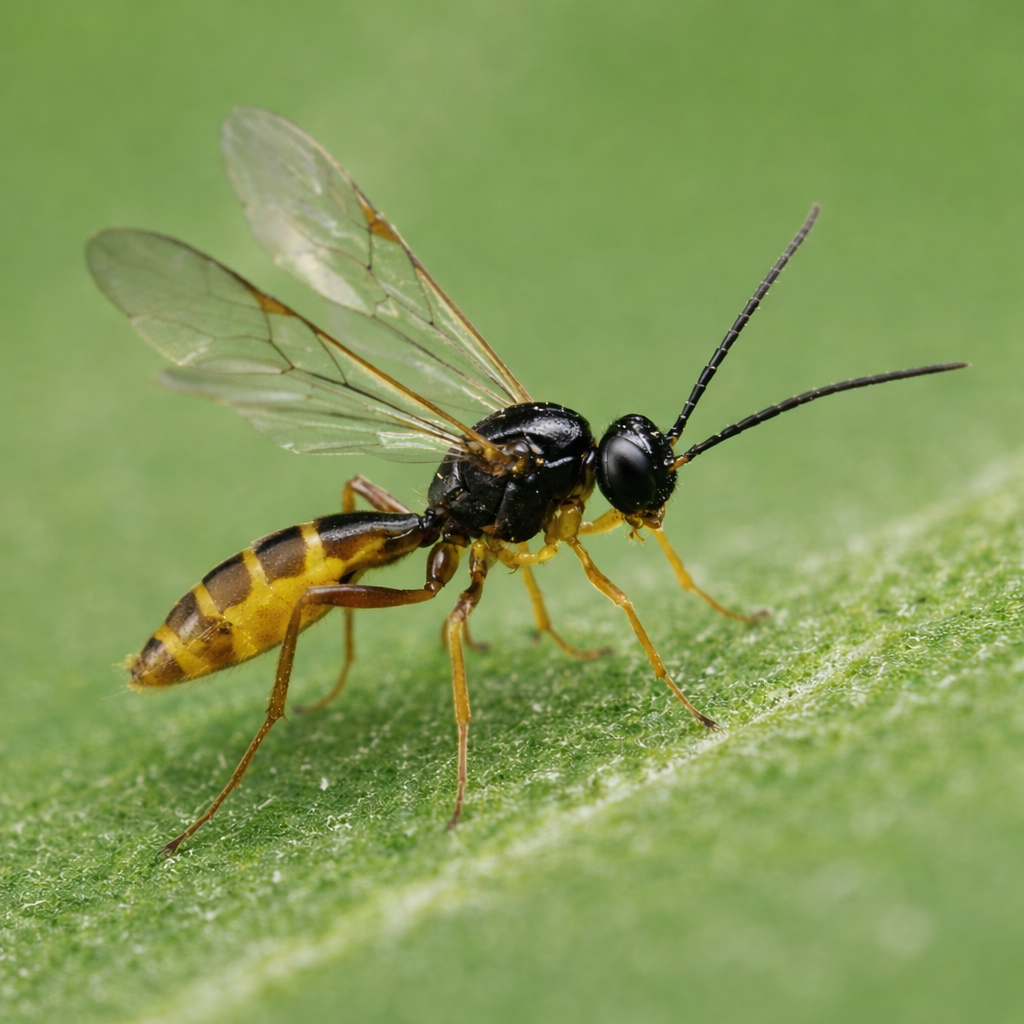
Each parasitoid plays a complementary role within the mix. Aphidius colemani reproduces quickly and is highly effective against smaller aphids such as melon, cotton, and green peach aphids. Aphidius ervi targets larger aphids, including potato and pea aphids, while Aphelinus abdominalis acts as a generalist parasitoid with a longer lifespan and extended egg-laying period, providing sustained pressure on aphid populations over time. Together, these species locate aphid colonies by detecting plant stress and alarm signals, ensuring efficient dispersal throughout the crop.
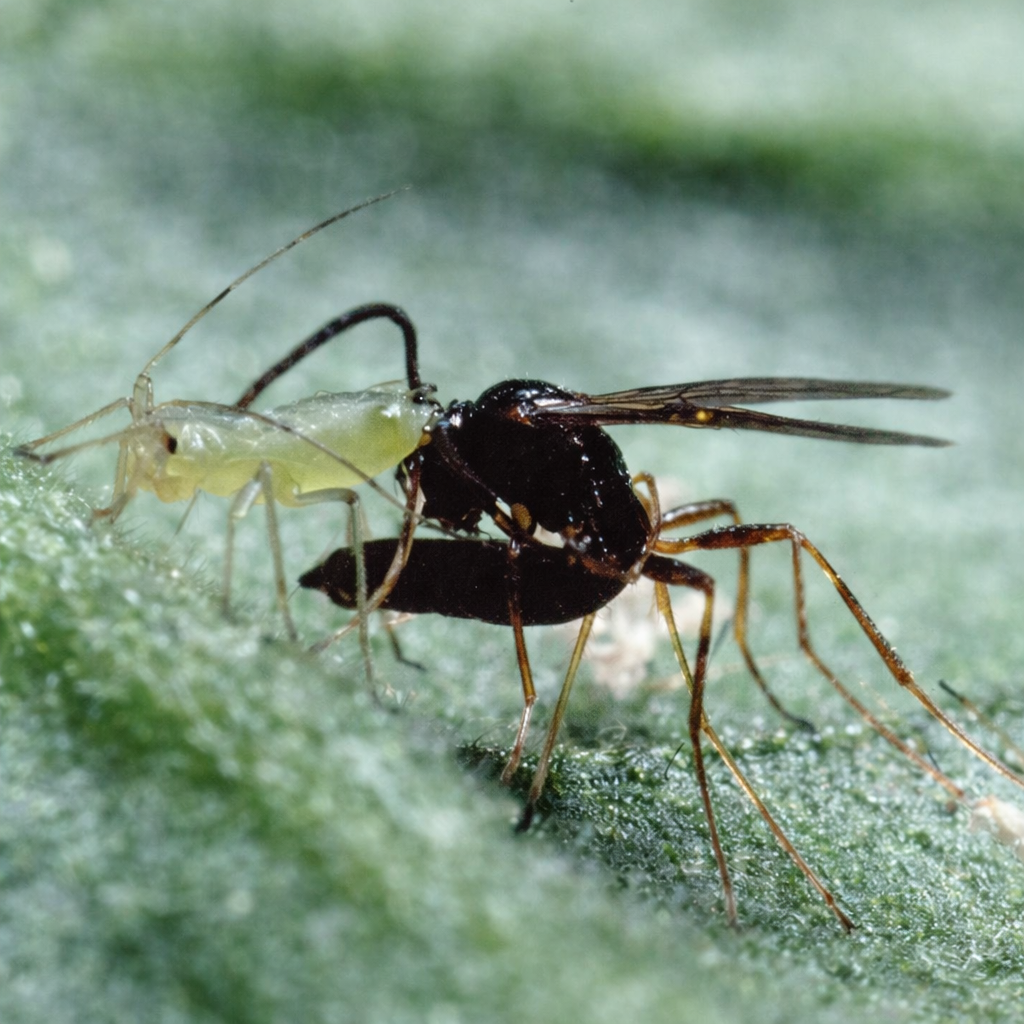
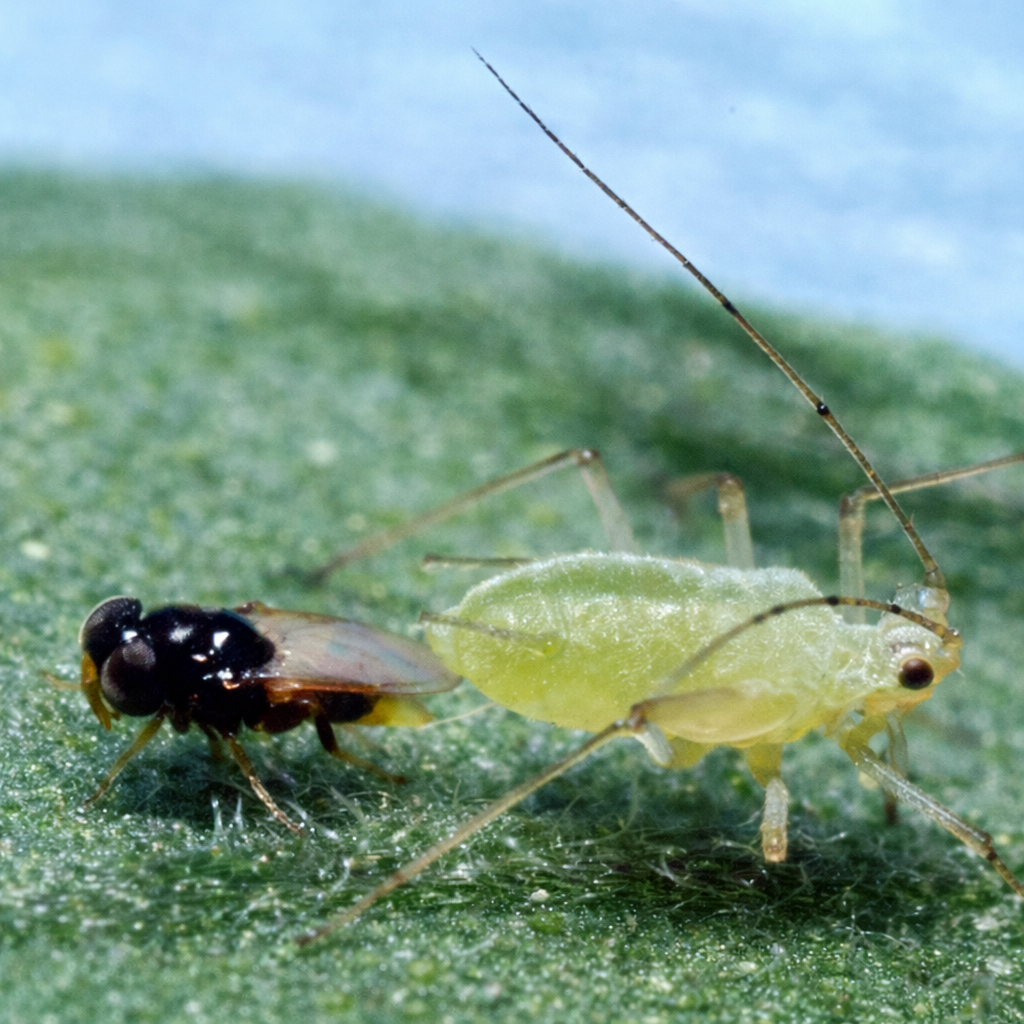
Control occurs through parasitism: adult wasps lay eggs inside aphids, the developing larvae consume the aphid from within, and the aphid eventually hardens into a brown “mummy.” New adult parasitoids then emerge to continue the control cycle, gradually reducing aphid populations without chemical inputs. For best results, ACE mix should be released preventatively or at the first sign of aphids, placed near known aphid hotspots or evenly distributed throughout the crop.
Environmental conditions play an important role in performance, with optimal activity occurring in moderate temperatures typical of greenhouses and garden environments. Prior to release, ants should be controlled, as they protect aphids in exchange for honeydew and can interfere with parasitoid activity. Yellow sticky cards used for monitoring whiteflies or thrips should be removed or minimized for several days following release to prevent capturing newly emerged beneficials. When used as part of an integrated pest management (IPM) program, ACE mix offers a sustainable, long-term solution for managing aphids while preserving beneficial insect populations.