
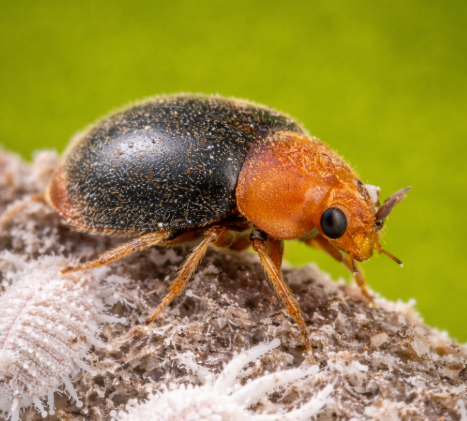
100 Cryptolaemus montrouzieri (Lady Beetles) - Mealybug Destroyer
Cryptolaemus montrouzieri, commonly known as the mealybug destroyer, is a highly effective beneficial beetle that preys on mealybugs and soft scale insects. Both the larvae and adults actively hunt pests, offering a fascinating example of biological pest control in action. In a learning kit, this species helps illustrate how natural predators keep plant ecosystems balanced without the use of chemicals.
Additional Info
Cryptolaemus montrouzieri (Mealybug Destroyer)
Cryptolaemus montrouzieri, commonly called the mealybug destroyer, is one of the most widely used and effective biological control insects for managing mealybugs, especially citrus mealybug (Planococcus citri). In the Bug Learning Kit, Cryptolaemus provides a powerful example of how natural predators regulate pest populations without chemicals, allowing learners to observe real ecological interactions up close.
Adult Cryptolaemus beetles are dark brown with bright orange heads and tail tips, measuring about 4 mm (⅙ inch) long. Their larvae are especially fascinating: they are alligator-shaped, grow up to ½ inch long, and are covered in white, waxy filaments that make them look almost identical to mealybugs themselves. This clever disguise helps protect the larvae while they actively feed, and spotting these “mealybug look-alikes” is actually a sign of successful biological control at work.
Both larvae and adults feed on mealybugs, with larvae being especially voracious—each larva can consume up to 250 small mealybugs during development. Eggs are laid directly into the cottony masses produced by mealybugs, ensuring newly hatched larvae have immediate access to food. Adults can fly, allowing them to search large areas for infestations, while older larvae will feed on all stages of mealybugs and, when necessary, also consume soft scales and aphids.
The complete life cycle takes about 31 days at warm temperatures and slows in cooler conditions. Cryptolaemus are most active in warm, bright environments and become inactive below 48°F (9°C). In the learning kit setting, they help demonstrate how temperature, sunlight, and prey availability influence insect behavior and population dynamics. Because plants grow slowly, visible reductions in mealybugs can take several weeks, but clean new growth is a clear indicator of success.
For best learning and performance, it’s important to understand the ecosystem around Cryptolaemus. Ants often protect mealybugs in exchange for honeydew, so ant management is essential for biological control to succeed. Most pesticides are harmful to Cryptolaemus, reinforcing an important lesson of the kit: biological control works best in systems that minimize chemical disruption.
Through hands-on observation, Cryptolaemus montrouzieri helps learners explore predator–prey relationships, insect life cycles, and the role of beneficial insects in maintaining healthy plant systems—making it a standout organism in the Bug Learning Kit.