
Fly Parasites (Weekly Shipping Subscription)
Fly Parasitoid Subscription (WEEKLY SHIPPING)
Select your Fly Parasitoid unit size (FP5, FP10, FP20, or FP50) and choose a weekly subscription at checkout for the most consistent and effective fly control under high fly pressure, large numbers of animals, incoming fly pressure from neighboring areas, or locations where flies are difficult to mitigate. Shipments arrive automatically and are billed weekly. Just select the number of shipments. Many customers rely on weekly releases during peak fly season (late June–early July) to quickly suppress populations. Unit size needs vary by animal numbers, manure conditions, and weather, but as a general rule, plan for 500–1,000 parasites per large animal every 3-4 weeks and 200–500 per small animal, increasing rates when pressure is severe and scaling back once control is established. An integrated approach, good sanitation and moisture management, trapping, parasitoid releases, and non-toxic fungal sprays, supports the best long-term results.

Additional Info
Fly Parasites
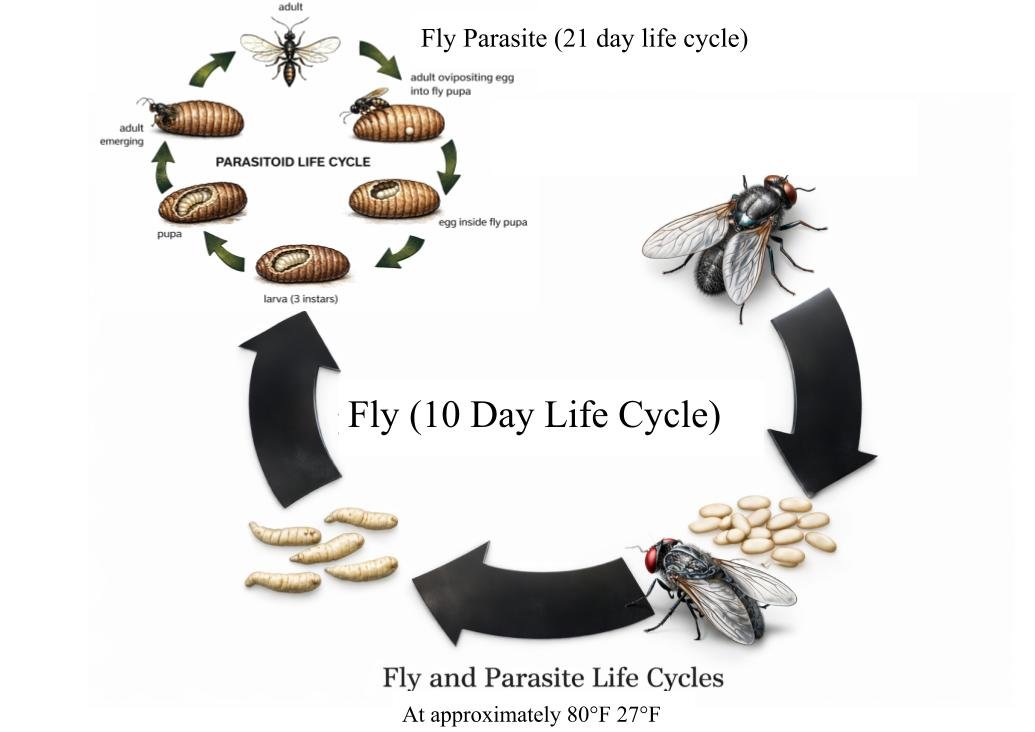
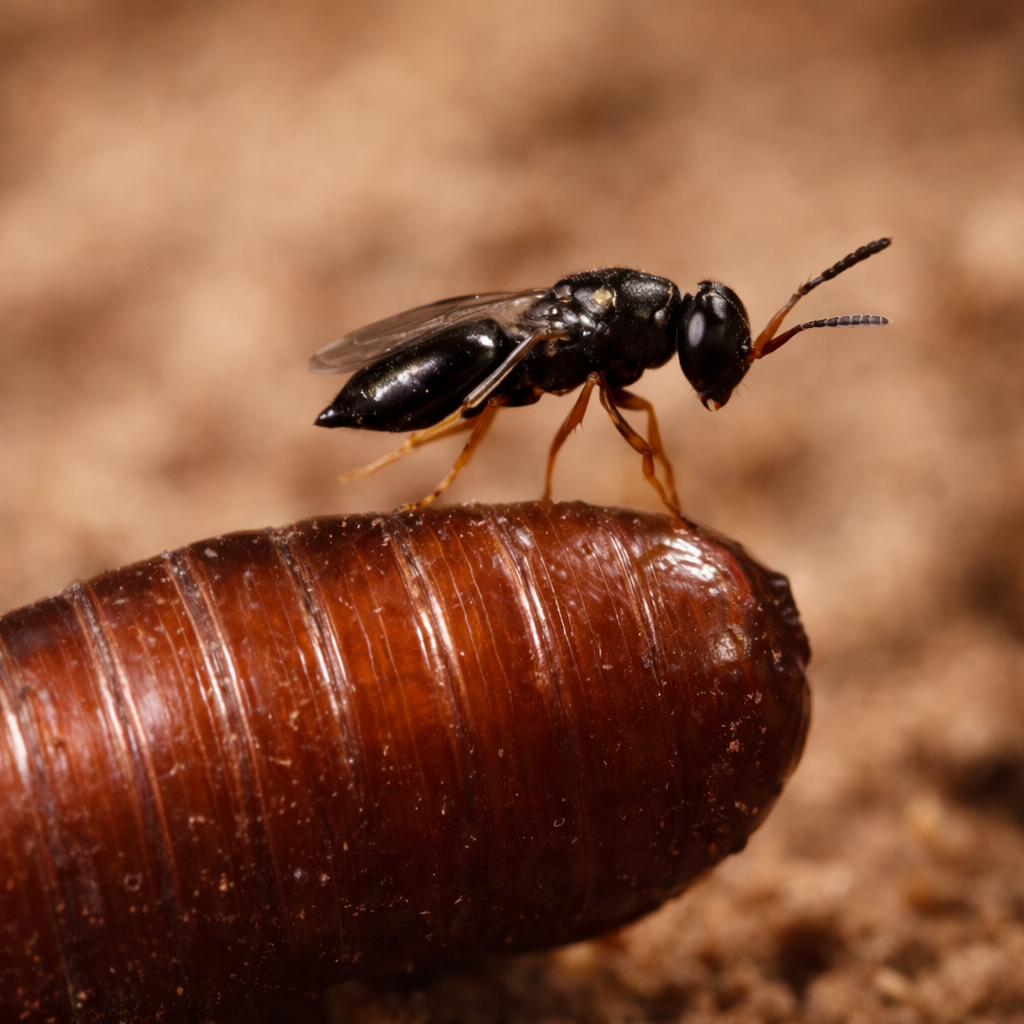
Mix of Muscidifurax raptorellus, M. zaraptor and Spalangia cameroni parasitic wasps. Targets filth breeding flies (housefly, stable fly, lesser housefly).
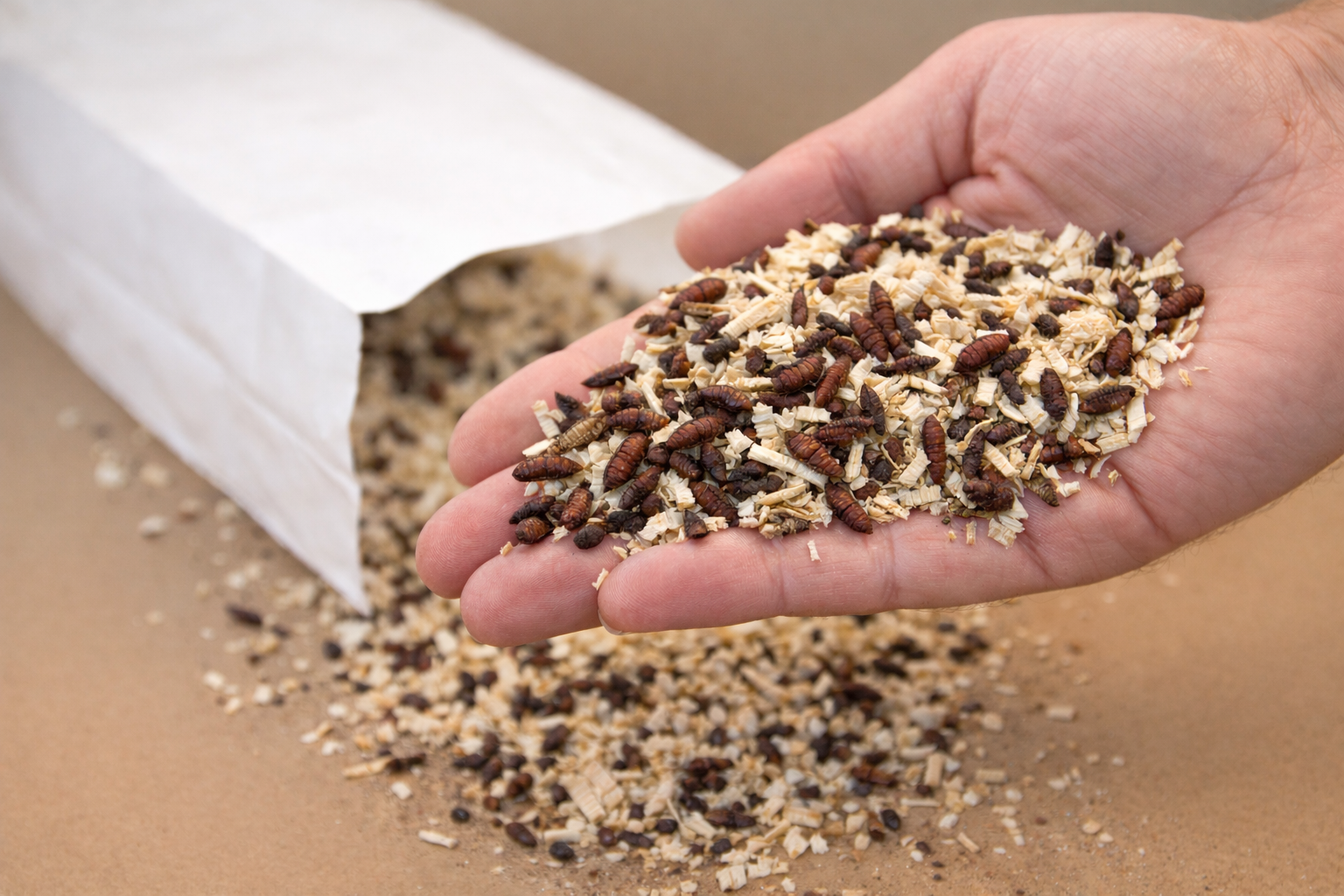
We supply a quality mixture of species of parasitic wasps developing inside fly pupae. These tiny wasps use biological radar to seek out maggots transforming into pupae, but don’t bother people or animals. They are shipped in breathable paper bags with wood shavings to cushion them in transit and absorb moisture.
Fly Parasite Schedules
Arrange for shipments every 1, 2, 3 or more weeks through the fly season. Feel free to adjust number of units and shipping dates as needed.
Estimating Number of Fly Parasites to Order
An FP10 unit contains a minimum of 10,000 fly pupae from which a minimum 20,000 adult parasites will emerge. Factors affecting recommended release rate: numbers of flies, amount and wetness of manure or other organic matter for fly breeding, temperature, humidity, naturally-occurring beneficial controls, incoming migrations and use of bait traps. A baseline rule of thumb is to use 500 to 1,000 parasites per large animal per month and two parasites per small animal per month. Double or triple up when fly problems are severe and cut back when the parasites are well-established and weather is cooler and drier.
