
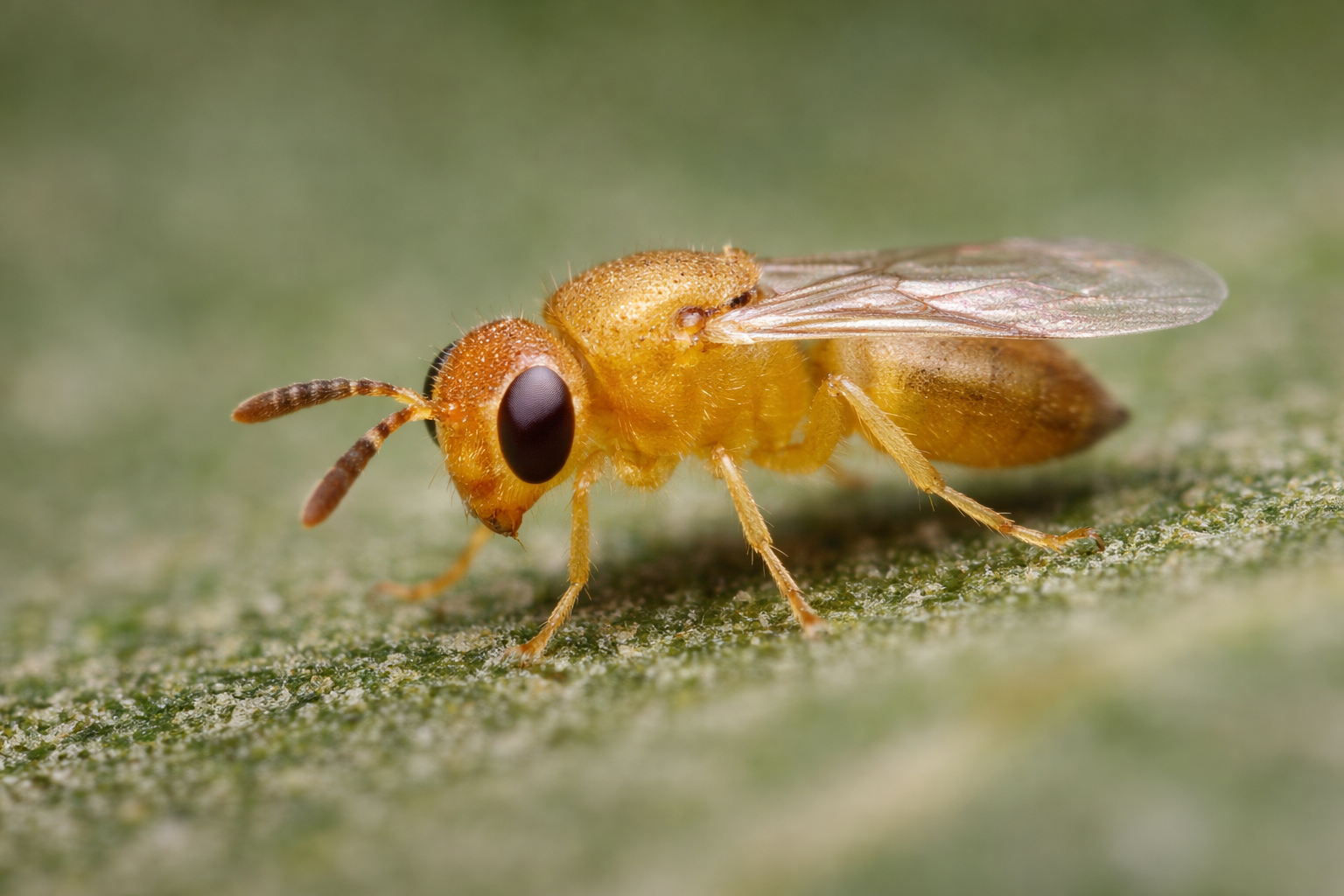
Aphytis melinus - Hard scale parasite
Aphytis melinus is a highly effective parasitoid wasp used for biological control of armored scale insects. Widely used in orchards, citrus, interiorscapes, and ornamental systems. Females lay eggs beneath the scale covering, while adults also kill scale through host feeding. Best results are achieved with regular releases beginning at the first sign of scale activity. Known as The Golden Chalcid.
Shipped Tuesday, order by previous Wednesday.
Additional Info
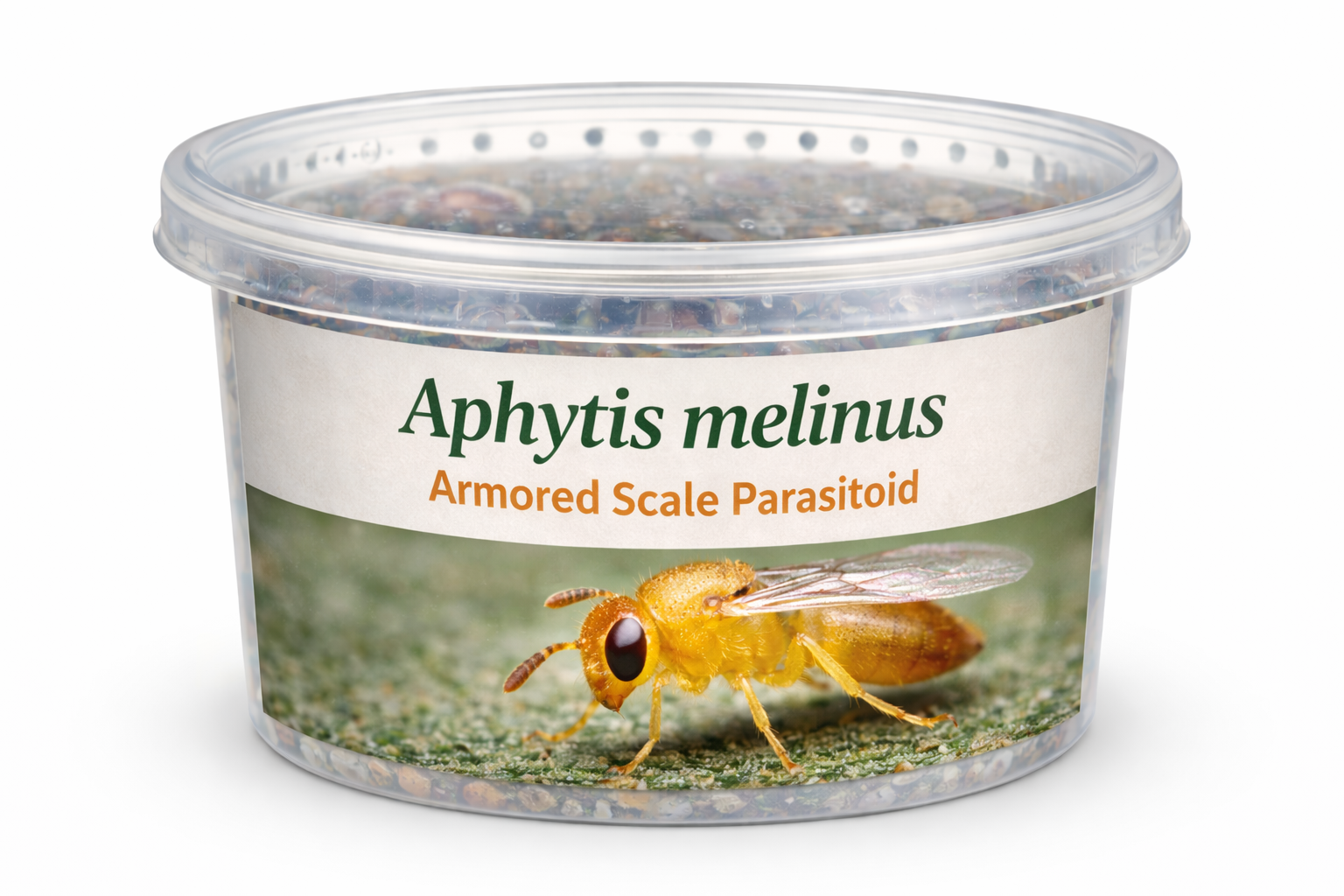
Aphytis melinus
Armored Scale Parasitoid
Contents:
5,000 · 10,000 · 20,000 · 30,000 adults for immediate release
Check contents upon arrival and report any issues at time of delivery.
Target Pests
(listed in order of preference)
California red scale (Aonidiella aurantii)
Citrus, roses, and ornamentalsIvy / Oleander scale (Aspidiotus nerii)
Palms, cycads, and many ornamentalsSan Jose scale (Quadraspidiotus perniciosus)
Walnut scale (Quadraspidiotus juglandregiae)
Dictyospermum scale (Chrysomphalus dictyospermi)
Biology
Aphytis melinus is a tiny (≈1 mm), yellow parasitoid wasp specialized for controlling armored scale insects. Females lay eggs beneath the waxy scale covering, where larvae develop protected from environmental exposure.
Parasitizes 2nd–3rd instar female scales and 2nd instar & pre-pupal male scales
Adults also host-feed, killing additional scale stages beyond those parasitized
Parasitized scales appear dried out and may show dark spotting
At 80°F, development from egg to adult takes 13–17 days
Adults live 10–15 days (up to 24), laying 6–7 eggs per day
Active and effective between 60–85°F with ≥50% relative humidity
Minimum release temperatures: 40°F night / 60°F day
Begin flying at ~50°F; several hours above this are needed for egg laying
Use in Biological Control
Aphytis melinus is most effective when released early and regularly, starting at the first sign of scale activity in spring and continuing until populations are suppressed.
Orchards & Outdoor Plantings
Release 1–2 cups per acre every other week until scale populations decline
Distribute evenly: release parasites in every 6th tree, every 6th row, rotating rows weekly
(~175 parasitoids per tree)Release on the shaded side of trees and when temperatures are below 90°F
Parasites may be released by:
Leaving an opened cup in infested trees, or
Walking the orchard with an opened cup for faster dispersal
Once control is established: ½–1 cup per acre annually in spring
If scale pressure is high, apply a summer oil spray 2–3 weeks before release
Interior Plantings & Greenhouses
Regular releases typically control infestations within 2–3 months
Maintenance: 1–3 releases per year
Guideline rates:
5–10 parasitoids per infested plant, or
10 parasitoids per square yard
Release by gently waving an opened cup around infested plants
Make 2–3 releases at 2–3 week intervals
Release at dusk or under shaded conditions
If scale populations are heavy:
Apply insecticidal soap 2–3 weeks before first release
Wash off honeydew just prior to release to improve parasitoid movement
Storage
Use the same day of arrival whenever possible
If short-term holding is necessary:
Store at approximately 60°F
Keep dark
Do not refrigerate
Do not place insects directly next to cold packs
Viability declines rapidly with extended storage
Pesticide Compatibility
Compatible with:
Horticultural oils
Insecticidal soaps
Bacillus thuringiensis (Bt)
Sabadilla
If more toxic pesticides are applied, re-release Aphytis approximately 4 weeks later.